
My wife and I run two small businesses, including a toy store on Martha's Vineyard that we bought in 2018 — a fixture in Vineyard Haven with decades of history behind it. The toy store is a labor of love, but also an important and valuable resource for the island community. As an independent toy store in the age of Amazon, we need to be innovative to keep and grow our customer base.
The analytics problem
The POS and inventory platform we implemented shortly after buying the store made operations much smoother. But it came with built-in reporting. It's stout as an inventory-management tool, but reporting is weak and complicated. It's got several unconnected reports, and getting the big picture on what's driving results is not really possible. For example, we can't easily explain why things happen: what impact does weather have, are there on-island events that are affecting results, how are margins trending? The system has no idea, and neither did we, unless we were willing to export data and build complicated spreadsheets that were a pain to maintain and instantly out of date.
As I mentioned, there are a lot of headwinds for small businesses these days. Amazon, inflation, tariffs, and other influences affect us and we had been making consequential decisions without a clear picture of what was driving them.
The pattern isn't unique to retail. A restaurant owner can see Saturday revenue dropped twelve percent, but not whether it was the weather, a sick employee, or something else. A landscaper sees gross margin compress without a clean read on which crew compositions and job types are pulling it down. The information is there. The answers are buried.
The website problem
When Covid hit in early 2020, we needed a way for customers to find us and buy from us while the store was closed. So we put up a website quickly, out of necessity — a basic catalog organized by category, not searchable, showing inventory that may or may not reflect what was actually on the shelf. This was also provided by our POS vendor, and it was equally meh.
When people started coming back into the store, the site became an afterthought. We knew it wasn't good. I became worried that a customer who found us online and encountered a dated, hard-to-navigate site might write us off before they ever walked in the door. But a proper rebuild would take time we didn't have and resources we'd rather put elsewhere. So it stayed, for longer than it should have.
Instinct is an increasingly risky default
When I talk with other small business owners about how they do things, the most common answers are twofold: intuition and prioritization. A fifteen-year business owner has developed a feel for the business that helps them make tough calls.
But instinct — and time — have their limits, which are getting harder to ignore. Costs move faster than they used to. Customer behavior shifts more quickly. Time demands on the business grow. The number of variables to track has grown. In short, small businesses need to reconsider how they improve results using affordable technology and services.
How Island Analytics works
I built Island Analytics' engagement model around the way operators run their days so that the process is intuitive and easy to integrate into your own:
-
1OutlineWe talk through your business — your goals, how you operate, the data you have, and where time and effort are being lost. No preparation needed.
-
2ConnectWe pull your information together, identify where the gaps and inefficiencies are, and build a plan around what will have the most impact.
-
3ModelWe show you a working version — an analysis, a streamlined process, or an automated workflow — and refine it until it matches how you actually think about the business.
-
4DeliverYou get a finished result that answers your real questions and improves how the business runs — from a one-time engagement to an ongoing partnership.
At the end of this process, you'll have answers and approaches that help you identify and execute on opportunities to improve results.
What it looks like in practice
Island Analytics offers a wide scope of services — from a one-time analysis or process improvement to an ongoing Advisory Partner engagement with monthly reporting and strategy sessions. Here's how it could work with your business.
On the analytics side, graduate from limited exposure to information about your business to a unified view that connects revenue, product performance, and external factors — comparable across any time period.
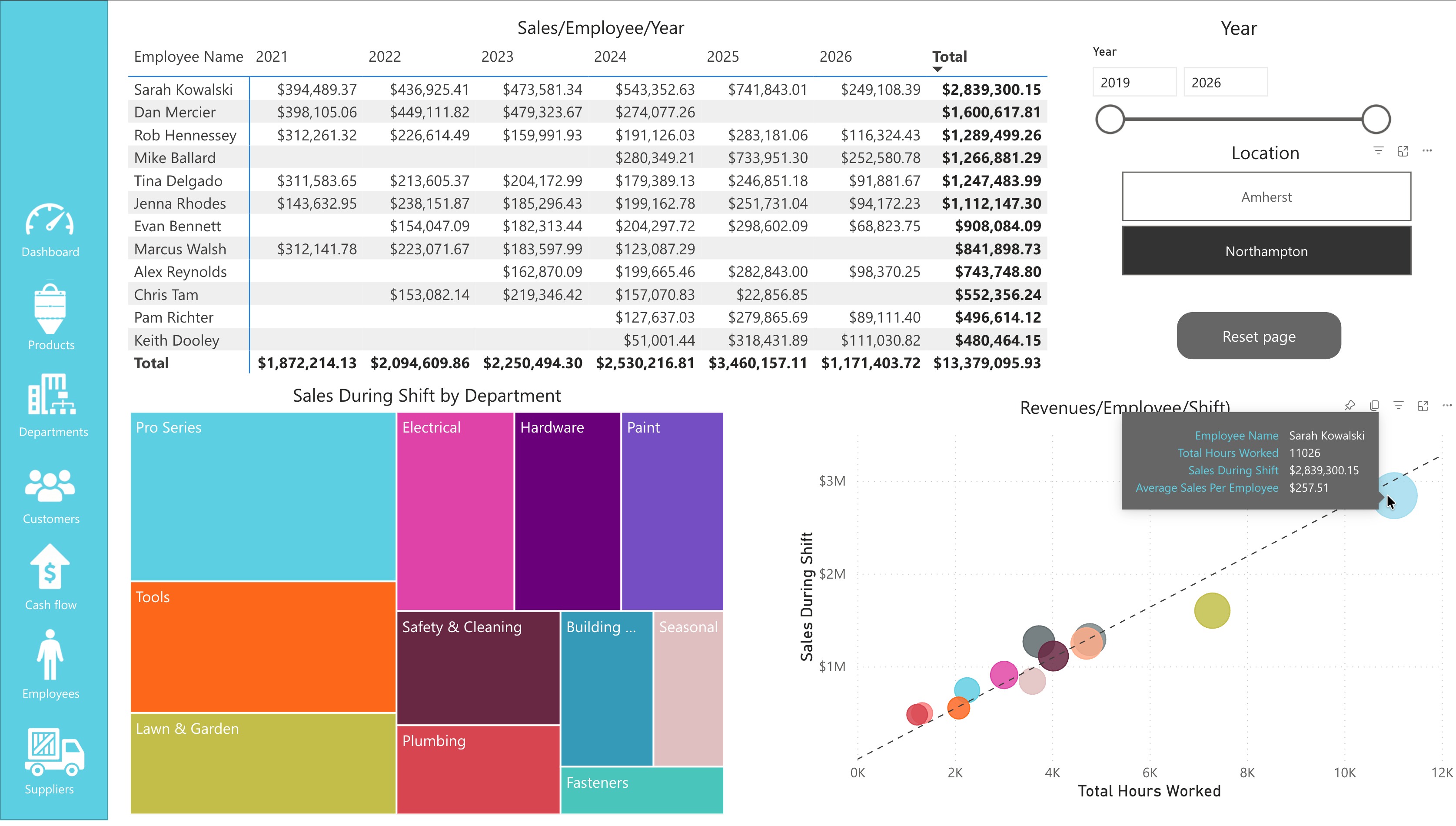
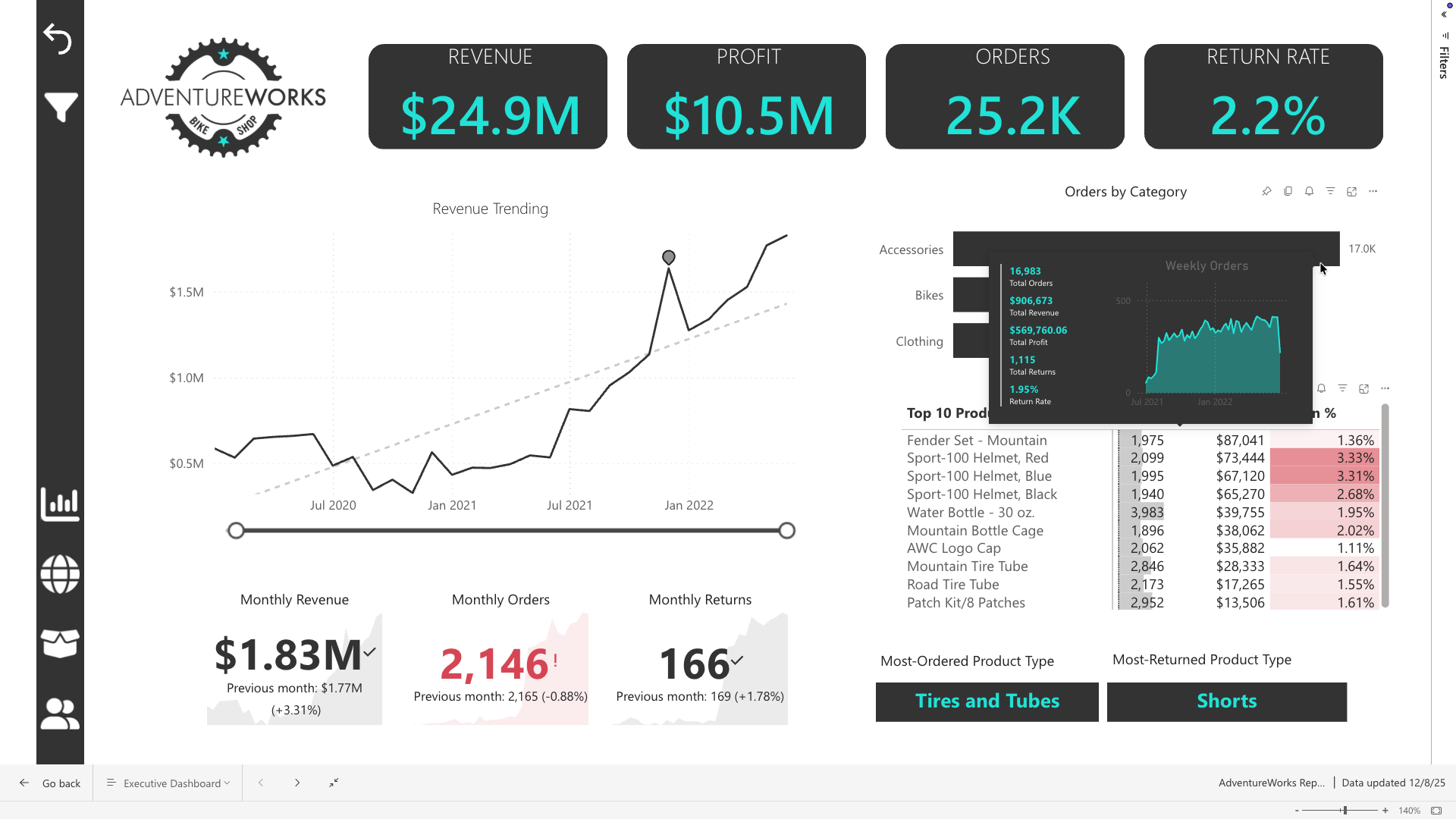
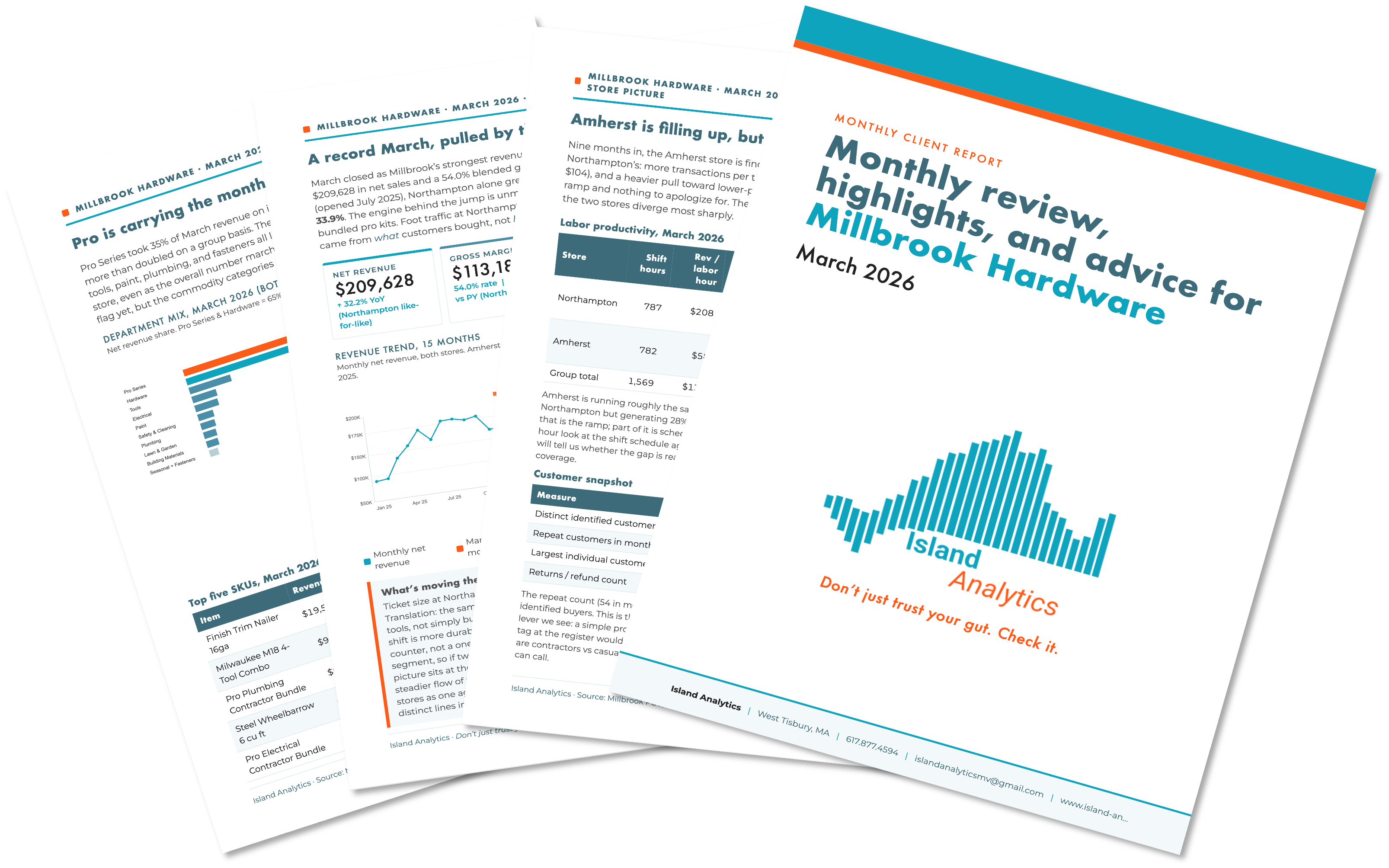
From a process perspective, judicious use of modern tools — AI included — can yield some pretty impressive results. The toy store, for example, was able to completely overhaul the capabilities and impact of our web presence.
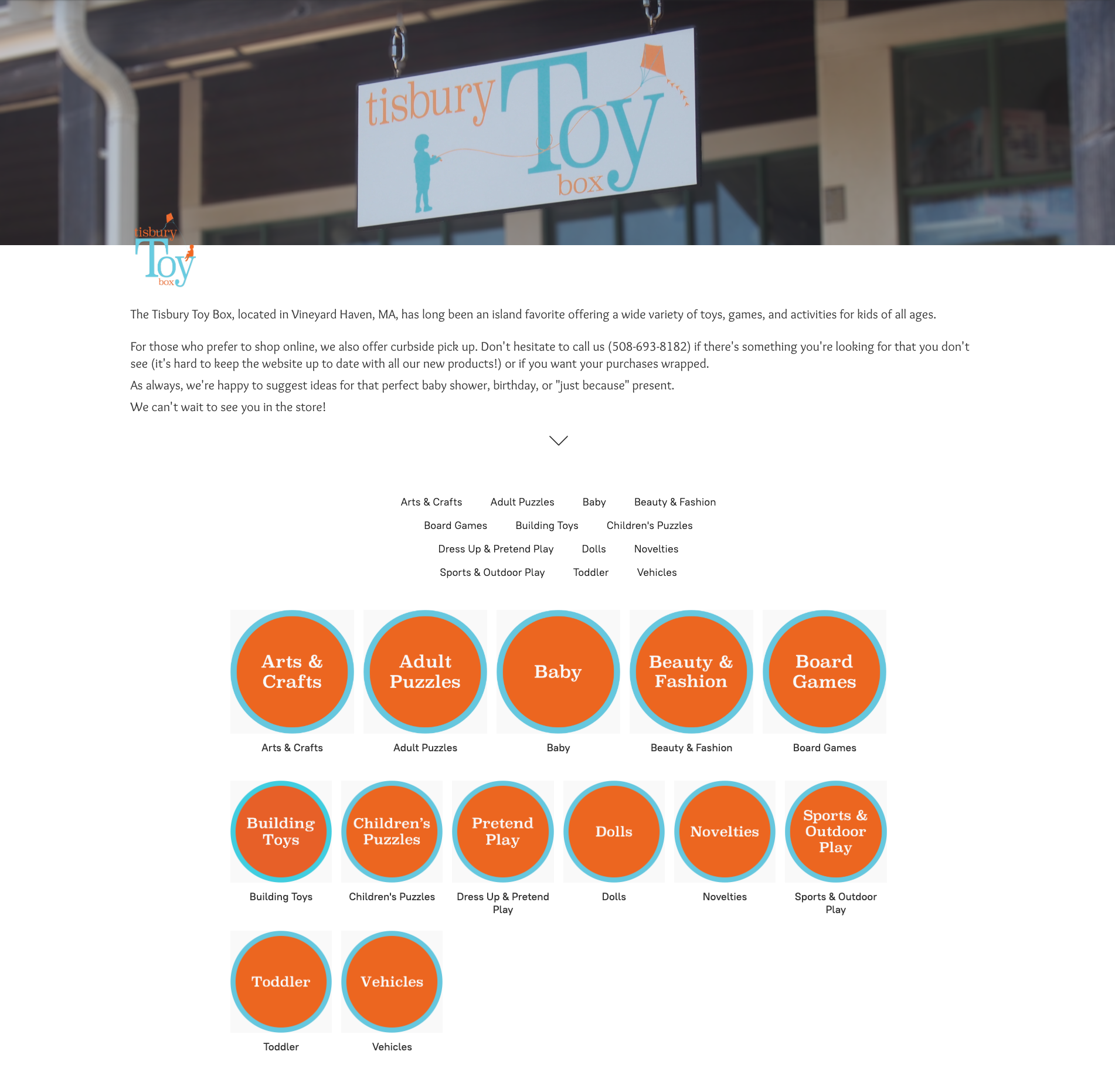
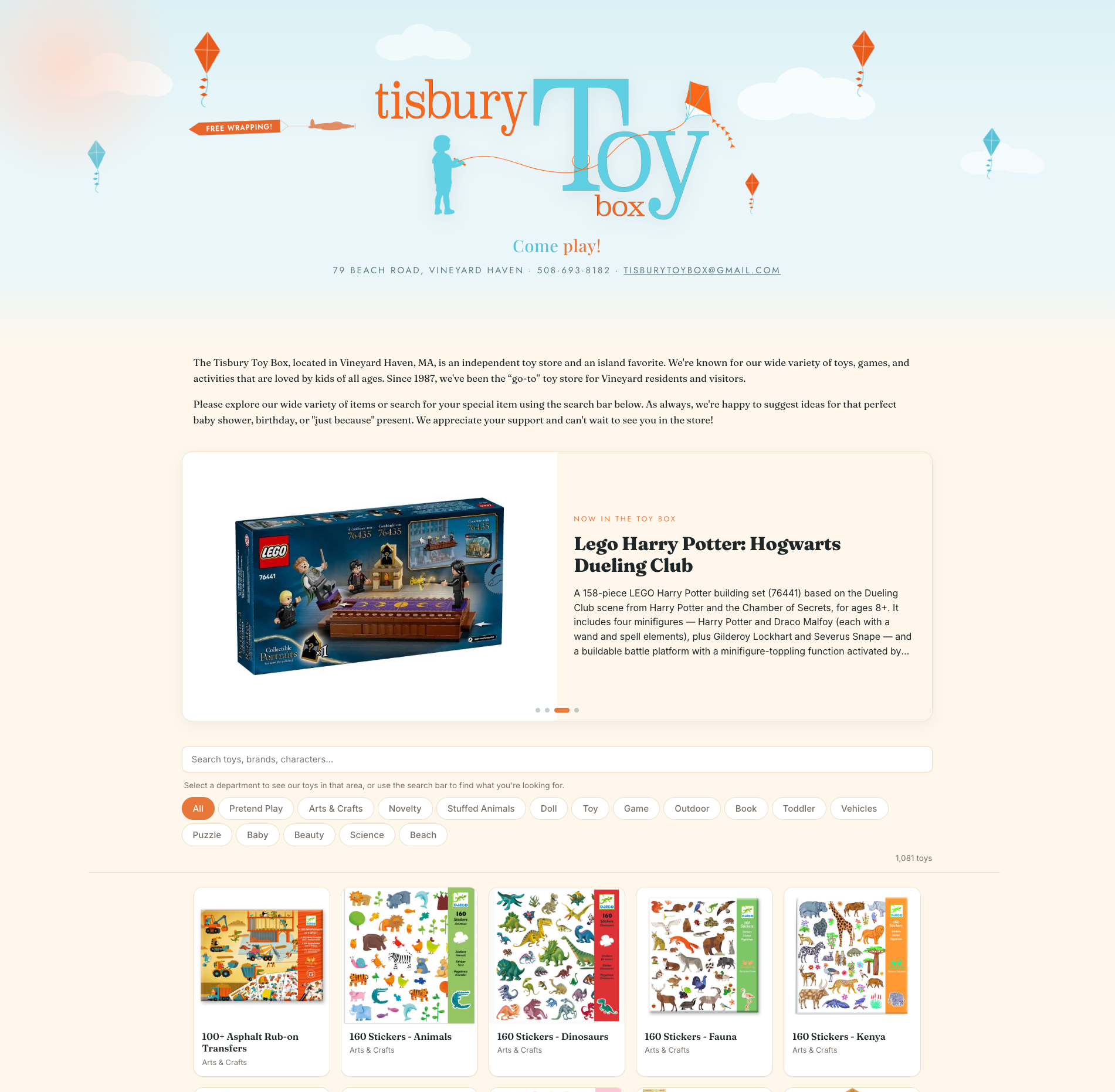
The new site stays current through a workflow built around the store's point-of-sale system. One command pulls a fresh inventory export. AI handles the time-consuming part — sourcing product images, writing descriptions, categorizing new items. Anything that needs a human call surfaces in a spreadsheet for a quick review before the final push goes live. The whole cycle takes less than an hour and requires almost no manual effort for the vast majority of products.
What makes Island Analytics different
Three things. The first is who it's for: small businesses that want clearer information and smarter operations but aren't large enough to hire the people who do that work in-house. The second is how the engagement scales — we meet you where you are, whether that's a one-time question or an ongoing partnership. The third is who's doing the work. I'm both a small-business owner and a technology veteran, and that combination matters. The problems I'm solving for clients are problems I've lived.